

 TECOBIAI GUIDE
TECOBI INSIGHTS
Dealership Operations
Explore dealership perspectives on Dealership Operations. Read the latest articles, follow a related topic, or ask the TECOBI guide to help you find a starting point.
Explore this topic with TECOBI
Articles about Dealership Operations
These are historical articles. Their advice and examples do not establish current product availability, pricing or results. Current reviewed product information takes priority.
Digital Retailing
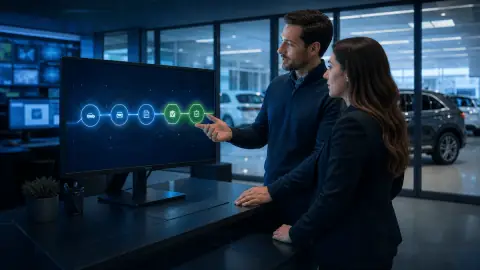
Automotive Digital Retailing Workflow: What Must Survive Each Handoff
Digital retailing should be judged by what survives each handoff, not by how many online steps it adds. This workflow teardown follows the shopper from website click to desk review, salesperson follow-up, appointment, and finance, showing what context must stay intact for the dealership to act intelligently.
Buyer Guides
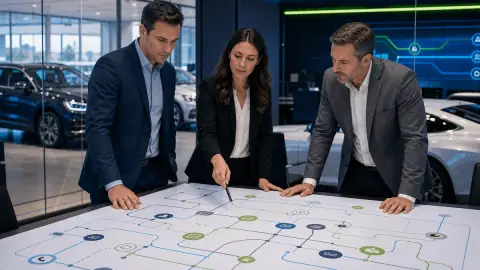
Response Handling vs Follow-Up vs Scheduling: Buy the Workflow Losing Customer State
A practical buyer guide for sales managers and BDC directors deciding whether to buy response handling, proactive follow-up, or appointment scheduling first. The core recommendation: buy the workflow that is currently losing customer state, especially when the pain is happening inside active conversations.

Dealership Operations
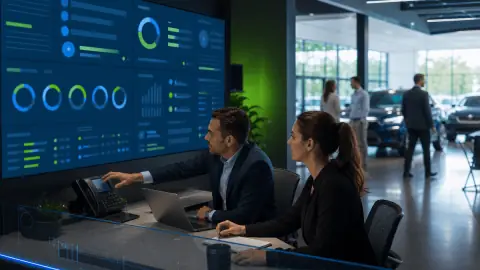
Response Bot Morning Inspection: Sort Unresolved Conversations by Risk, Not Timestamp
BDC managers should not inspect unresolved Response Bot conversations by oldest timestamp alone. This operator playbook shows how to bucket unresolved threads by customer risk: ready buyers who are blocked, conversations that need human judgment, unclear customer states, and lower-risk follow-up that can wait. The practical goal is not to clear messages; it is to protect the opportunities most likely to break if no one acts first.
Response Bot
Response Bot Morning Triage: Prioritize Overnight Replies by Risk, Not Timestamp
Morning reply management should start with risk triage, not timestamp order. This operator playbook shows dealership sales managers and BDC leads how to separate urgent customer state from routine overnight backlog, assign the right human owner, and measure the morning by unresolved conversation risk instead of cleared messages.

Automotive CRM
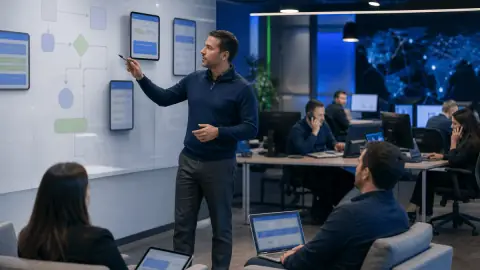
Dealertrack Integration vs RouteOne vs DMS-Aware Follow-Up: Which Credit Workflow Keeps Deal Context Visible?
Dealertrack and RouteOne can both move credit and finance work forward, but dealership operators should compare them by what the sales team can still see after the handoff. This guide explains where each credit path fits, why DMS-aware follow-up matters, and how TECOBI helps preserve live conversation context around finance movement.
Automotive AI
Dealership Software Buying Is Shifting From Feature Bundles to Accountability Layers
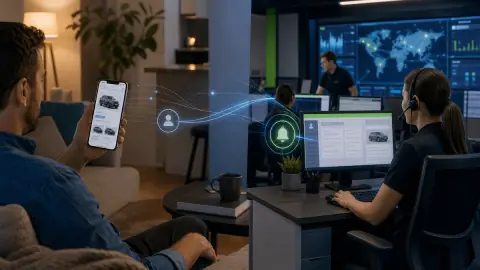
Dealership buyers are becoming less impressed by broad feature bundles and more focused on which software layer actually owns the customer work. This news analysis explains why accountability layers are emerging as the practical buying unit for automotive AI, CRM, reporting, follow-up, and handoff workflows.
Dealership Operations
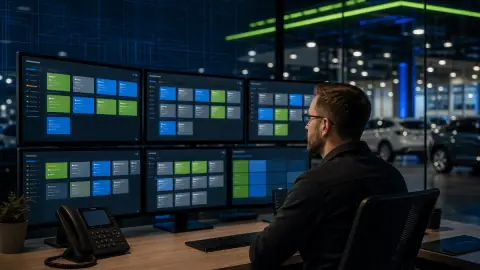
Website Lead Intake Workflow: What Must Survive From Form Submit to First Reply
Website lead intake fails when the dealership preserves contact data but loses the context needed to work the lead. This teardown follows the path from form submission to CRM assignment to first meaningful reply, showing where vehicle intent, form type, comments, transcripts, appointment requests, trade clues, finance signals, and source history often disappear. The fix is not another generic lead-response process.
Dealership Operations
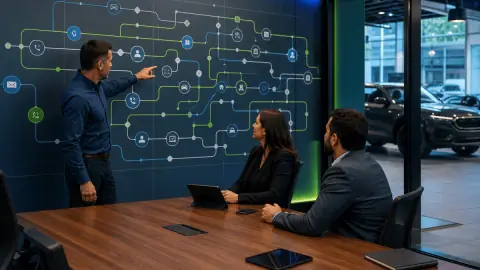
After-Hours Response Workflow: What Should Happen in the First Hour After an Overnight Reply
This workflow teardown explains what should happen in the first hour after a late-night inbound dealership reply arrives. The thesis: after-hours replies are a state problem first. Speed matters only after the system understands whether the customer is confirming, asking, objecting, scheduling, opting out, or waiting for a human. The article gives BDC directors and after-hours managers a minute-by-minute control sequence for classification, thread preservation, routing, and morning handoff.
AI CRM
AI CRM for Dealerships: Buy the Layer That Owns the Conversation Break
Dealerships should not buy AI CRM by category buzzwords. They should identify the most expensive conversation break first: inbound replies, proactive follow-up, or reportable workflow control. This buyer guide maps when Response Bot, Auto Bots, or the full TECOBI Platform should own the next improvement.

Dealership Operations
Service Customer Texting Workflow Teardown: What Should Happen After the First Message
Service customer texting should not create another queue. This workflow teardown shows what should happen the moment a service customer texts: identify the status at risk, attach context, acknowledge without overpromising, route by authority, and keep the conversation visible until the next step is clear.

Dealership Operations
Response Bot Diagnostic: How to Tell When Dealership Replies Are Getting Buried
Buried replies are an operational symptom, not just a messaging delay. This diagnostic guide helps dealer principals and BDC directors inspect whether inbound customer replies are visible, owned, routed, handed off, and reportable before they become missed opportunities.
Dealership Operations
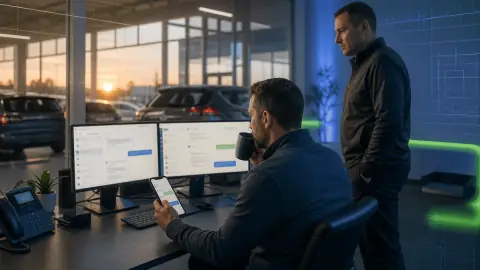
After-Hours Reply Recovery for Dealerships: A Morning Handoff Workflow That Does Not Restart the Conversation
This workflow teardown shows BDC directors and after-hours managers how to recover overnight dealership replies by reading the conversation thread as current state. Instead of treating the morning as a fresh queue, the process classifies the customer’s last move, inspects prior context, hands off one clear next action, sends a continuity-based human reply, and reviews unresolved threads in reporting before the morning rush buries them.

Automotive AI
Automotive Lead Management Triage: Start the Right Workflow Before the First Message
Dealerships should not route every lead by age alone. This operator playbook explains how BDC directors and internet sales managers can inspect deal state, source, intent, and required next action before the first message so high-intent search leads, early-stage social leads, and recycled CRM records enter the right workflow from the start.

Dealership Operations
What Customers Notice When Dealership Appointment Scheduling Works as a Continuity System
Appointment scheduling should not be treated as a standalone calendar feature. For dealerships, the real customer result comes when scheduling stays connected to the conversation: customers repeat themselves less, staff ownership is clearer, inbound replies after booking are handled, and managers can see why visits show, reschedule, or drop. TECOBI supports that operating model by connecting Appointment Scheduler with Response Bot, Auto Bots, human handoffs, and reporting.
Automotive AI
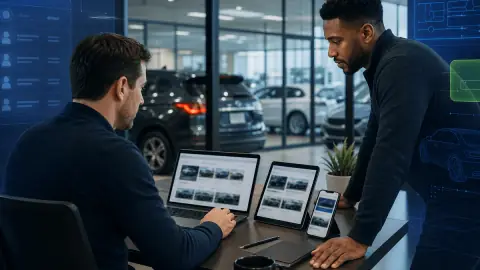
Automotive Digital Retailing Software Checklist: Does It Preserve Customer Context?
Digital retailing software should be evaluated by whether it preserves context across the shopper’s path, not by how many screens it adds. This checklist helps dealership website managers and digital retailing owners inspect handoff continuity, vehicle context, desk visibility, mobile usability, conversation protection, and the lost-context drill before buying or renewing a tool.
Automotive CRM
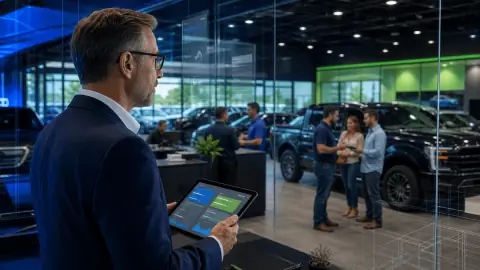
Stop Managing the CRM. Start Managing Conversation State.
Dealership CRMs still matter as systems of record, but they are no longer the best unit of daily management. This opinion piece argues that principals and GSMs should manage conversation state: whether each buyer is active, stalled, waiting, scheduled, reactivated, or ready for a human handoff. That model gives leaders clearer visibility, fairer accountability, and better follow-up quality than inspecting scattered leads, tasks, and notes.
Automotive AI
Automotive AI CRM: What Dealerships Should Expect From an Always-On Conversation Layer
An Automotive AI CRM should do more than create tasks or generate chatbot replies. For dealerships, the practical value is an always-on conversation layer that handles inbound replies, runs persistent follow-up, supports appointments, routes human handoffs, protects message control, and gives managers useful reporting. This post explains how TECOBI fits that operating role and what dealers should look for when evaluating AI CRM tools.

Automotive CRM
Automotive CRM Integrations That Keep Dealership Reporting Clean
A historical overview of eLead and VinSolutions integrations, with an update on supported CRM workflows.
Compliance
The Dangers of TCPA Violations for Dealerships
TCPA violations are not small mistakes for dealerships. They can trigger complaints, lawsuits, carrier scrutiny, and operational chaos. This post explains where dealers go wrong, why consent-aware control matters, and how TECOBI Shield helps keep texting disciplined without slowing the team down.
Automotive CRM
Agentic CRM for Dealerships Should Work Like an Operating Layer
Dealerships do not need another CRM dashboard. They need an agentic operating layer that keeps inbound replies, proactive follow-up, reminders, and human handoffs in one accountable workflow.

Automotive CRM
Why Dealerships Need One AI CRM Conversation Layer for Every Customer Touchpoint
Dealerships do not need more disconnected automation. They need one AI CRM conversation layer that keeps inbound replies, proactive follow-up, reminders, and human handoffs in the same workflow so managers can see ownership clearly and salespeople can act faster.
Automotive AI
Training & Accountability: How TECOBI Keeps Teams Using the System Correctly
TECOBI treats training and accountability as part of the operating layer. This post explains how video modules, user scorecards, access enforcement, and daily KPI review help dealerships keep staff using the CRM correctly until the store is consistently passing the checks.
Automotive CRM
AI Follow-Up for Long Buying Cycles
Dealerships do not lose long-cycle deals because of one weak reply; they lose them when follow-up stops after day one. This post explains how AI follow-up keeps old leads, no-shows, and undecided shoppers moving with persistent, relevant touches over weeks or months without adding more manual task work.
Customer Communication
Hybrid AI Handoff: How Dealerships Use AI and People Together
A practical guide to using AI for first response, routing, and follow-up while handing conversations to people when judgment, empathy, or deal-making matters.
Automotive AI
Why Governed AI Customer Communication Matters for Dealerships
Governed AI customer communication gives dealerships a practical way to scale follow-up without losing control. This post explains how consent awareness, opt-out handling, quiet-hour discipline, message control, and human handoffs reduce operational risk and keep AI useful across sales and service workflows.