
Most dealerships judge every lead source with the same question: “Is this customer ready to buy right now?” That mindset makes sense for low-funnel sources. If a shopper submits a pricing request, a trade appraisal, or a specific vehicle inquiry from a search-heavy channel, the store expects urgency. But that same standard causes dealers to undervalue Facebook and Instagram leads. Meta is good at creating early-stage opportunity.
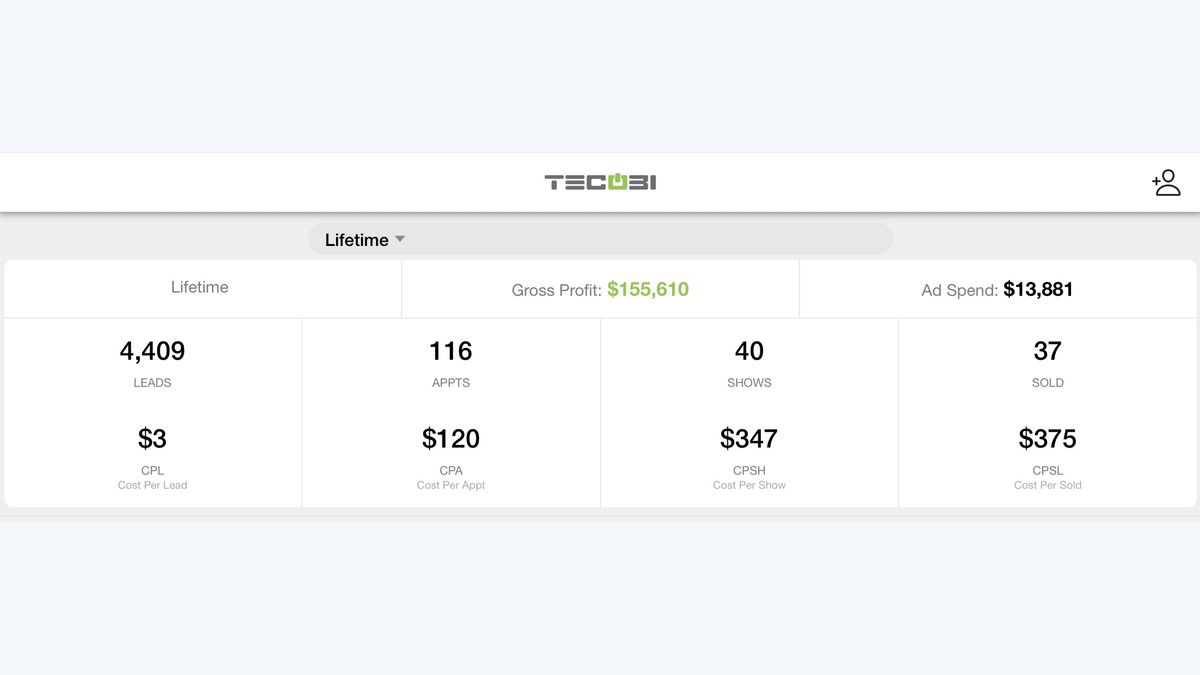
Traditional CRM follow-up is bad at converting early-stage opportunity. TECOBI sits in that gap: instant response, persistent nurture, Response Bot inbound handling, Auto Bots proactive follow-up, and human handoffs when the shopper is actually engaged.
The mistake: judging every lead by ready-now intent
Facebook and Instagram are not search platforms where every shopper is actively hunting for the lowest price on a specific VIN today. They are discovery platforms. A customer may be scrolling after work, see a payment that fits, notice a trade-in message, or click on a sales event because replacing their current vehicle has been in the back of their mind. That shopper may be interested, curious, checking affordability, comparing options, or six weeks away from buying.
That does not make the lead bad. It makes the lead higher-funnel. Higher-funnel does not mean low quality. It means the customer usually needs more time, more education, more reminders, and more consistent follow-up before they are ready to raise their hand again.
- Low-funnel lead: often shopping actively, comparing vehicles, and asking for numbers now.
- Higher-funnel Meta lead: often responding to an offer, payment, inventory message, or event before they are fully in-market.
- Dealer mistake: treating both leads like they should behave the same on day one.
How Facebook and Instagram Lead Generation Ads actually work
Meta Lead Generation Ads allow shoppers to submit their information directly inside Facebook or Instagram without leaving the app. The form can be tied to a static offer, a sales event, a finance message, a lease special, a trade-in campaign, a specific vehicle, or a dynamic inventory ad. That low-friction form is the point. You are not waiting until the customer searches for “best price near me” and sends the same inquiry to three stores.

You are catching attention earlier, while the shopper is still forming intent. This creates a valuable opportunity and an operational problem at the same time. The opportunity is early demand. The problem is volume.
If every Meta lead drops straight into a traditional CRM task queue, the sales team often gets flooded with people who are not ready to buy today. Those leads get a few calls, a few texts, maybe an email or two, and then the store moves on.
- The customer can convert without leaving Facebook or Instagram.
- The lead can be generated from an offer, vehicle, payment, trade-in message, or inventory ad.
- The lead often arrives earlier than a low-funnel search lead.
- The store needs a process built for persistence, not just speed.
Example: A Facebook/Instagram lead ad built around a specific dealership offer
Static image ads are useful when the dealership wants to push one clear message: a lease special, finance offer, sales event, new model promotion, or dealership-wide campaign. The Fiesta Nissan Edinburg example shows a Facebook and Instagram lead ad promoting a 2026 Nissan Rogue SR offer with 0% APR financing for 60 months or a $395/month lease for 39 months with $5,000 due at signing. The visible call to action is a simple lead form action inside Facebook. That is a classic Meta opportunity.
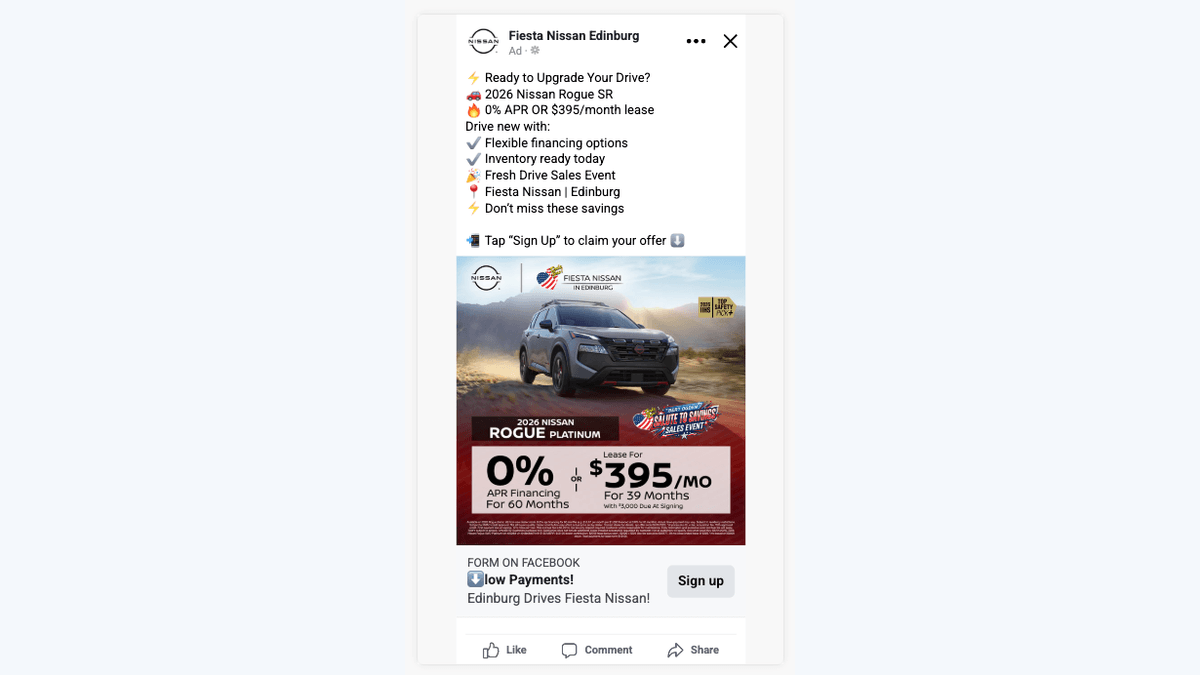
A shopper may not have opened a search browser looking for that exact Rogue today. But a clear offer in their feed can create interest. If the dealership responds immediately and keeps the conversation alive, that early interest has a chance to turn into an appointment instead of disappearing into a CRM task list.
- Best for sales events, finance specials, lease offers, and model-specific promotions.
- Works well when the offer is simple enough for a shopper to understand while scrolling.
- Needs immediate and persistent follow-up because the shopper may still be early in the process.
Example: Dynamic inventory-style Facebook/Instagram ad for dealership shoppers
Dynamic inventory-style ads help dealerships promote actual vehicles and relevant affordability hooks directly inside Facebook and Instagram. Instead of one static offer, the shopper can see inventory-driven messages connected to available units, payment options, down payment offers, trade-in incentives, and used vehicle opportunities.
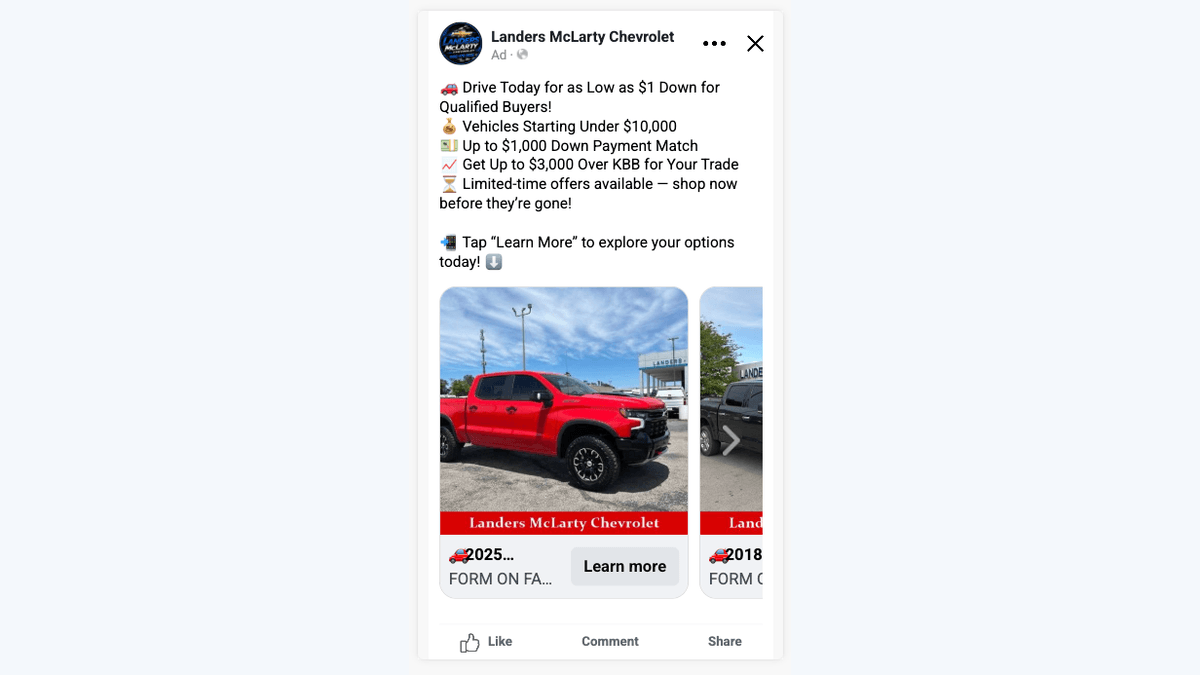
The Landers McLarty Chevrolet example shows a Meta ad built around affordability and inventory: vehicles starting under $10,000, as low as $1 down for qualified buyers, up to $1,000 down payment match, and up to $3,000 over KBB for trade. Those messages speak to real shopper questions: “Can I afford this?” “Can I get approved?” “What is my trade worth?” “Is there something available that fits my budget?” For many dealers, that is where Facebook and Instagram are strongest.
They can surface inventory and affordability before the customer becomes a low-funnel price shopper.
- Promotes real inventory inside the Meta feed.
- Can use affordability, down payment, trade-in, and used-car hooks.
- Helps create demand before a shopper starts comparing the same vehicle across multiple stores.
Why traditional dealership CRM workflows underwork Meta leads
Salespeople are not lazy because they focus on the customer who is replying today. They are doing what the pay plan and the sales floor demand. If someone is asking for numbers, booking an appointment, or walking in, that person gets attention first. The issue is that higher-funnel Meta leads require a different operating rhythm.
They may need a fast first response, then a follow-up later that day, then a useful check-in tomorrow, then a payment question answered next week, then a reactivation message when inventory or incentives change. Traditional CRM processes are usually built around tasks and short-term urgency. They rely on humans to clear the next call, next email, and next text. When lead volume rises, the work breaks down.
Managers see tasks completed, but not always meaningful conversations created.
- Salespeople naturally prioritize ready-now buyers.
- Higher-funnel leads need more touches over a longer period.
- Manual task queues make consistency difficult at volume.
- A lead can be marked worked without being truly nurtured.
How TECOBI fixes the Meta lead follow-up problem
TECOBI connects directly to Facebook and Instagram Lead Generation Ads so the conversation starts when the shopper submits the form. The system does not wait for a salesperson to notice a task or get through a call list. TECOBI’s AI and automation handle the early-stage work that most dealership teams struggle to maintain: immediate response, common question handling, ongoing nurture, re-engagement, and routing to a human when the customer is responding or showing buying intent. That matters because the goal is not to replace the sales team.
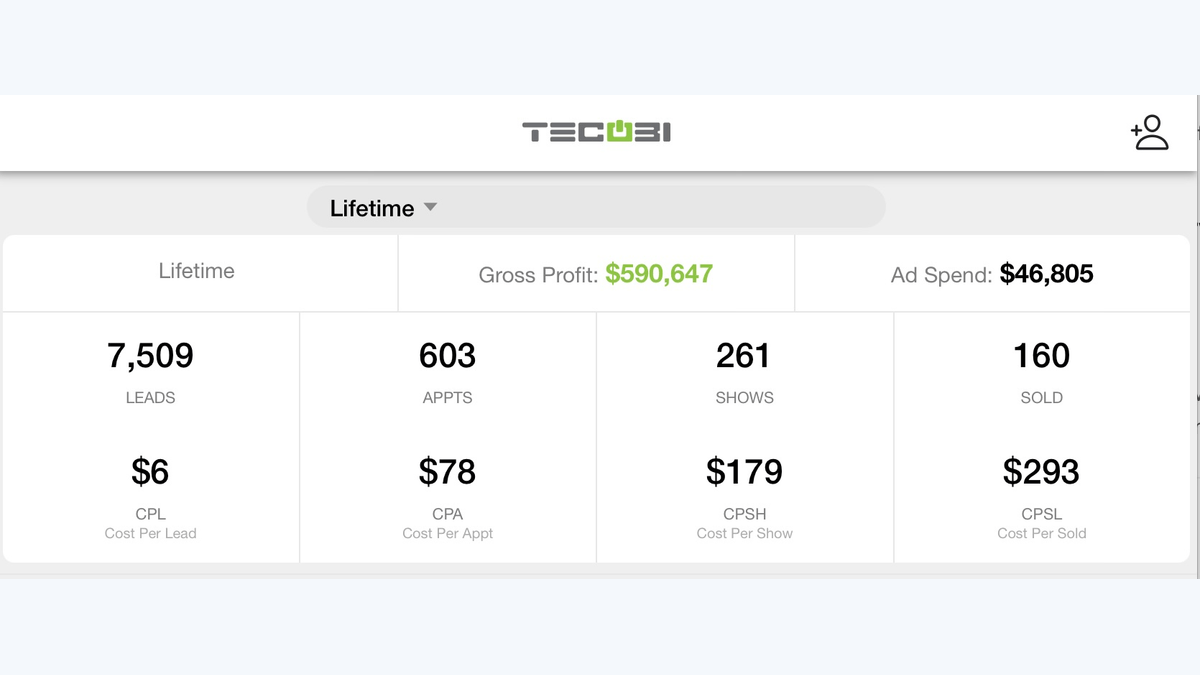
The goal is to stop burying the sales team in unqualified task work. TECOBI keeps the conversation alive until there is a reason for the team to jump in.
- Response Bot handles inbound replies and helps route engaged customers to the right human handoff.
- Auto Bots run proactive follow-up, nurture, and reactivation over time.
- Managers get a clearer view of active conversations instead of only completed CRM tasks.
- The sales team spends more time with shoppers who are responding, engaged, or ready to move.
Low-funnel leads are not free of problems either
Low-funnel sources still have a place. They can produce customers who are closer to buying now. But dealers should be honest about the tradeoff. By the time a customer reaches a low-funnel channel, they may already be comparing the same model across multiple stores.
The dealership is now fighting for attention in a more competitive environment, often with higher advertising costs and more pressure to discount. Facebook and Instagram give dealers a different play. Instead of waiting until the shopper is in lowest-price mode, the store can create demand earlier with offers, inventory, payments, trade-in messages, and events. That early demand only pays off if the follow-up process is built to nurture it.
- Low-funnel sources can bring ready-now shoppers.
- They can also bring more competition and stronger price pressure.
- Meta can reach shoppers before they become active price comparers.
- The dealership needs persistent follow-up to turn that advantage into pipeline.