








Automotive AI

Automotive AI for dealerships that need faster response, better follow-up, and cleaner human handoffs.

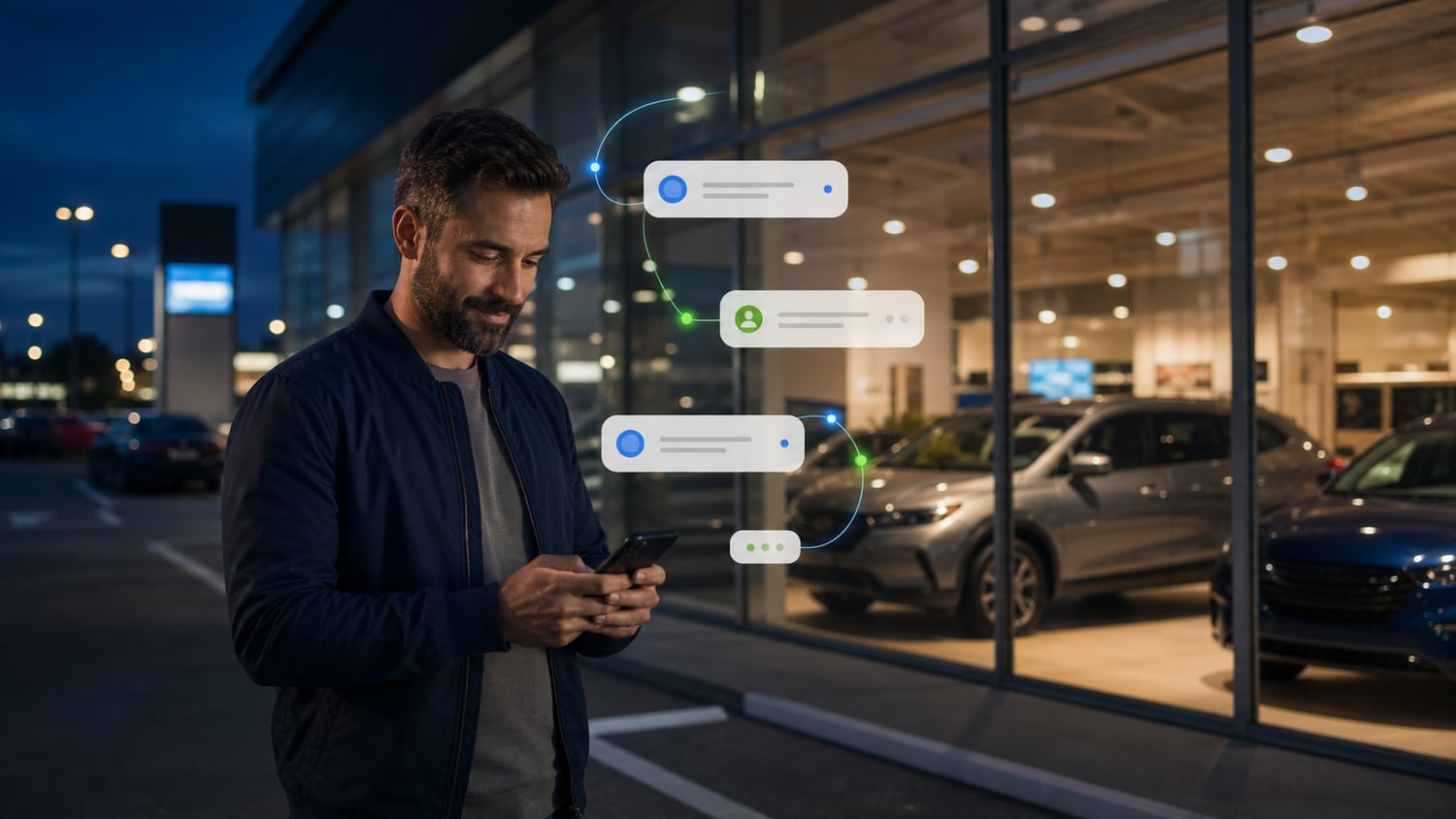
TECOBI is an AI CRM operating layer for dealerships that need artificial intelligence to manage real customer conversations, not just generate more tasks. It protects speed-to-lead, persistent follow-up, inbound reply handling, and human routing inside the same dealership workflow.

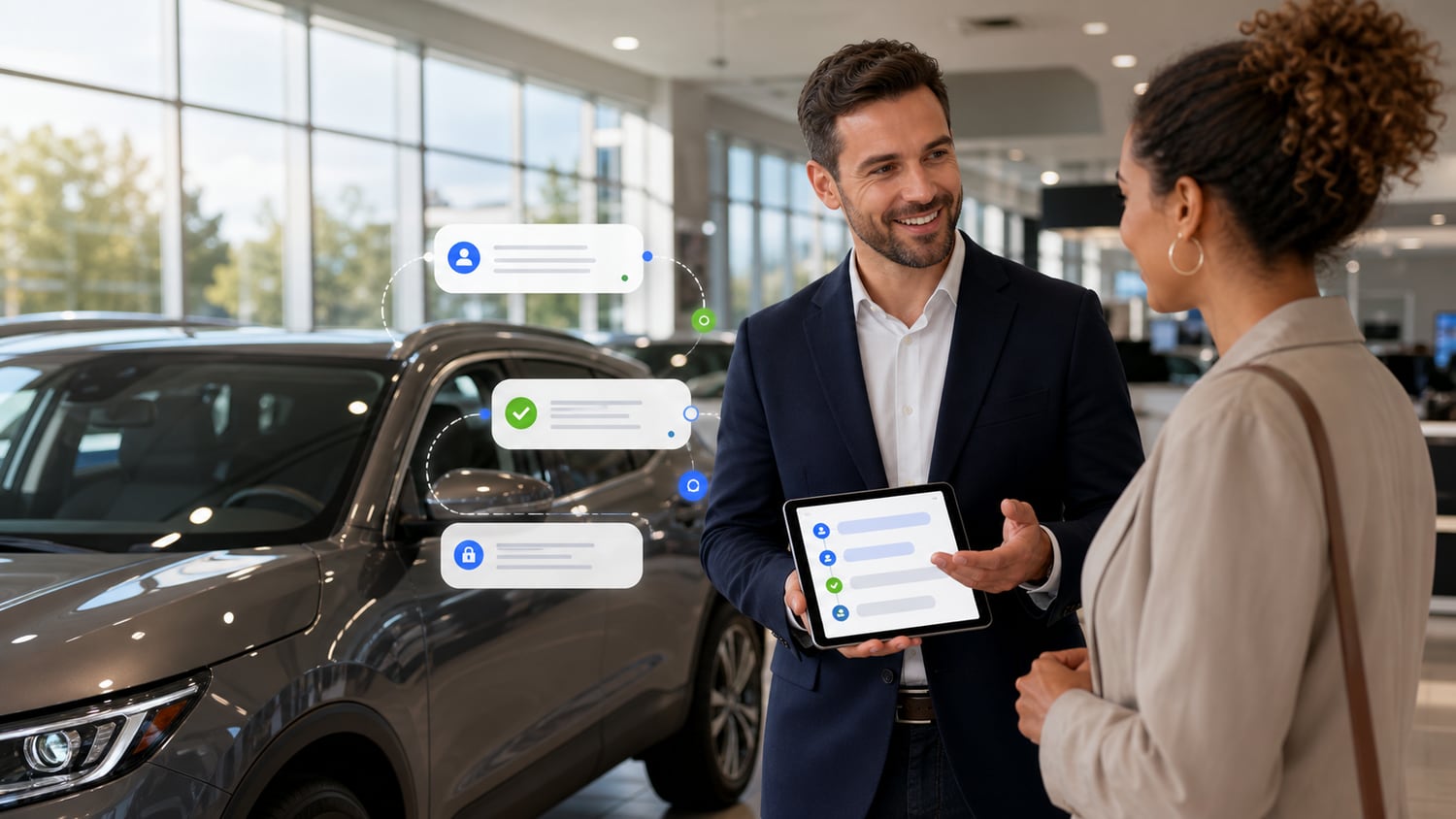
TECOBI automotive AI workflow
Lead arrives Immediate text-first coverage
Customer replies AI handles context and intent
Buyer engages Human handoff with conversation history
Store systems CRM, DMS, inventory, trade, credit
Speed-to-lead Protected by workflow

Reply coverage does not wait for the next available salesperson.

Follow-up Persistent by design

Auto Bots® keep nurture and reactivation moving long after normal task windows fade.

Inbound replies Managed in context

Response Bot handles customer replies and routes human judgment where it belongs.

Dealership systems Connected

CRM, DMS, trade, inventory, titling, and credit workflows stay part of the same operating model.

What automotive AI means for dealerships

Artificial intelligence matters most when it protects the communication work that usually fails under dealership pressure.

A lot of dealership software talks about AI as a scoring feature, chatbot, or content tool. That is not enough. Automotive AI should help the store respond faster, keep follow-up alive longer, and route real customer intent back to humans without losing context.

TECOBI approaches automotive artificial intelligence as an operating model. The goal is not to replace salespeople or BDC teams. The goal is to give them better coverage, cleaner visibility, and fewer missed opportunities across the conversation lifecycle.

Why dealerships need it

The dealership workflow breaks in predictable places.

The point of automotive CRM AI is to close those gaps before slow response, inconsistent follow-up, or messy handoffs turn demand into lost revenue.

01

Manual CRM tasking breaks under real dealership volume.

Internet leads, aged opportunities, showroom traffic, and inbound replies compete for the same human attention. Automotive AI matters most when it protects the conversation work that otherwise gets skipped.

02

Fast first response is still fragile at many stores.

The lead source can be strong and the marketing can be expensive, but the opportunity still dies when the first reply depends on whether a rep is free right now.

03

Long-tail follow-up is where most missed revenue hides.

Aged leads, unsold showroom traffic, and old opportunities often still have intent. They just do not survive a process built around perfect human discipline.

04

The handoff from AI to people has to be clean.

Generic bots create noise. Dealership teams need artificial intelligence that can identify intent, keep context, and route the right customer back to the right human.

How TECOBI applies automotive AI

One operating layer across response, nurture, inbound routing, and reporting.

This is where TECOBI moves beyond generic dealership automation and into conversational AI that actually supports sales execution.

Automotive AI for lead response

TECOBI helps dealerships protect the first conversation with immediate text-first outreach, website widget coverage, and AI-managed first-touch workflows.

Automotive AI for follow-up and nurture

Auto Bots® handle proactive follow-up, aged-lead recovery, and reactivation so the store can keep working demand that would otherwise disappear into stale CRM tasks.

Conversational AI for dealership inbound replies

Response Bot manages customer replies, applies conversation logic, and escalates humans when the customer needs judgment, negotiation, or store-specific action.

Automotive CRM AI with reporting and accountability

Managers get cleaner visibility into active demand, handoff moments, and message performance instead of mistaking task completion for real customer movement.

Automotive CRM AI

Why AI CRM beats manual task management at the dealership level.

It works the entire communication layer, not just the task list.

Automotive CRM AI should manage live conversations, timing, escalation, and outreach quality. A task reminder alone does not protect revenue.

It keeps human teams focused on judgment, not background chasing.

Salespeople, BDC reps, and managers should spend time with engaged buyers, not with repetitive touchpoints that software can manage more consistently.

It connects to dealership systems instead of living as a disconnected bot.

TECOBI is strongest when AI can operate against the same CRM, DMS, inventory, trade, and finance systems the store already uses.

Automotive AI integrations

Automotive AI only works when it lives inside dealership systems.

TECOBI already supports the CRM, DMS, credit, trade, inventory, history, and titling workflows that matter inside automotive retail.

Integration group 2 providers

CRM and lead workflow

Automotive AI has to live inside the same customer record and activity flow your sales and BDC teams already use.

VinSolutions

TECOBI can work directly against VinSolutions lead, contact, showroom, and activity workflows so stores do not have to choose between AI engagement and CRM discipline.

  • Scheduled lead-pull jobs, lead-source handling, and contact lookup or creation help TECOBI keep working against the same customer record VinSolutions teams already trust.
  • Appointment events, showroom updates, SMS activity, and completed call writeback can flow back into VinSolutions with notes, call-detail context, and manager-visible lead state changes.
Visit website

Fortellis / eLead

For stores running eLead through Fortellis, TECOBI can stay inside the customer, opportunity, and activity lifecycle instead of forcing teams to reconcile two separate systems by hand.

  • Customer creation and update flows, opportunity creation, and delta-search endpoints give TECOBI a cleaner way to follow fresh eLead activity than email-only lead handling.
  • Fortellis activity endpoints and webhook processing support appointment scheduling, completion, and event-driven lead-state sync back into the CRM flow.
Visit website
Integration group 3 providers

Inventory and merchandising context

Shoppers ask about vehicles, history, trades, and availability inside the conversation. AI gets stronger when that context stays attached to the lead.
TradePending

TECOBI can keep TradePending valuation activity attached to the live lead so trade intent, appraisal context, and follow-up timing stay in one operating flow.

  • The integration uses TradePending select and report endpoints, including VIN and plate lookup paths, to pull valuation context before saving the trade-in back onto the lead.
  • Trade-in progress and report links can remain visible inside the TECOBI workflow while reps continue texting, scheduling, and managing the same customer record.
Visit website

CARFAX

CARFAX support keeps vehicle-history context close to the selling workflow so reps do not have to leave the conversation just to answer ownership or history questions.

  • Inventory records carry CARFAX links, icons, and ownership flags, and the frontend can open or send those links from inventory search and modal flows.
  • Backend CARFAX FTP jobs support dealer and VIN-list file exchange so vehicle-history data can be refreshed and pushed back onto inventory records at scale.
Visit website

HomeNet Automotive

HomeNet Automotive support gives TECOBI a direct inventory ingest path so vehicle data, stock changes, and price movement can keep fueling live dealership follow-up instead of drifting out of sync.

  • TECOBI receives HomeNet inventory payloads, stores each feed event, and processes insert, update, and delete records into dealership inventory with VIN, pricing, stock, media, condition, and merchandising details.
  • That incoming inventory stream can drive downstream action inside TECOBI, including out-of-stock handling, resend-based sync refreshes, and price-drop follow-up creation for leads already tied to the affected vehicle.
Visit website
Integration group 4 providers

Credit, deal, and titling workflows

Conversation coverage should not disappear when the buyer moves from messaging into finance or deal-structure steps.

Dealertrack

TECOBI can hand off from conversation into Dealertrack credit-app workflows without breaking continuity when the deal moves from messaging into F&I.

  • The platform builds and submits Cox or Dealertrack-compatible credit-app payloads, stores returned deal references, and exposes visible submission history in the lead credit workflow.
  • Dealer-file export support and partner-dealer ID handling help multi-rooftop stores keep the downstream Cox setup aligned with how they actually operate.
Visit website

RouteOne

RouteOne support lets TECOBI carry momentum from live customer conversation into deal-jacket and credit-application workflows instead of treating F&I as a disconnected step.

  • Enabled stores can send credit applications to RouteOne directly from the lead credit interface, with timing and submission history visible in the same workflow users already work in.
  • Backend deal-jacket and credit-application creation preserve RouteOne conversation IDs, GUIDs, and audit trail details so follow-up and F&I action stay connected.
Visit website

700Credit

700Credit support gives TECOBI a direct soft-pull path so stores can qualify buyers earlier without forcing a hard-credit step before the customer is ready.

  • Quick Qualify flows and soft-pull triggers can route customers into a 700Credit-backed credit check from TECOBI website widgets, embedded forms, and text-first workflows.
  • That lets stores surface stronger finance context sooner, segment buyers more intelligently, and keep credit qualification attached to the live conversation instead of pushing the customer into a disconnected process.
Visit website

AutoTitling

AutoTitling support helps the deal desk stay accurate on title, tax, and registration math while TECOBI keeps the customer side of the process from going dark.

  • Deal-desk flows can request AutoTitling fee loads and location-specific zip-code data so taxes, TTL, and registration costs are calculated against the actual pencil.
  • That means backend titling progress and customer communication can stay aligned instead of splitting into one system for fee math and another for follow-up.
Visit website
Integration group 2 providers

DMS and operational data

Dealership artificial intelligence becomes more operationally useful when DMS and prospect-writeback workflows are part of the same system design.

DealerVault

DealerVault support gives TECOBI a practical path into dealership DMS data flows, helping stores turn syndicated sales files into usable follow-up, reporting, and operational workflows.

  • TECOBI can connect to the DealerVault FTPS feed, list and retrieve incoming files, validate the expected header layout, and save clean imports into the platform's DMS ingestion pipeline.
  • Once that data is inside TECOBI, teams can use it for DMS-aware reporting, salesperson matching, and downstream workflows, with manual upload, column mapping, and review screens available when a store needs a fallback import path.
Visit website

LightSpeed DMS

LightSpeed DMS support gives stores a direct way to push TECOBI-managed prospect activity back into the DMS when they need stronger operational visibility than a standalone messaging layer provides.

  • TECOBI can build and post the AddProspect XML payload LightSpeed expects, including contact data, preferred contact method, vehicle interest, and notes.
  • The lead or chat workflow can trigger the push directly, while submission logging keeps response status and returned identifiers available for audit and troubleshooting.
Visit website

FAQ

Common questions about automotive AI for dealerships.

What is automotive AI for dealerships?

Automotive AI for dealerships is software that helps stores manage customer conversations, follow-up timing, intent detection, routing, and repetitive communication work without relying on perfect manual execution from sales or BDC teams.

How does artificial intelligence help car dealerships sell more cars?

Artificial intelligence helps dealerships respond faster, keep follow-up going longer, recover aged demand, prioritize engaged buyers, and route customers to humans with more context. The result is usually better contact rates, cleaner handoffs, and fewer missed opportunities.

Can automotive AI integrate with dealership CRM and DMS systems?

Yes. TECOBI integrates with major dealership systems across CRM, DMS, credit, titling, trade, and inventory workflows so AI activity can stay connected to the store's existing operating stack.

Does AI replace dealership salespeople or BDC teams?

No. TECOBI is built to offload repetitive communication work and support cleaner human handoffs. The goal is to help people focus on engaged customers and decisions that actually require human judgment.

What is the difference between conversational AI and a dealership CRM?

A dealership CRM stores records, activities, and pipeline state. Conversational AI manages the actual customer interaction layer: when to reply, how to follow up, when to escalate, and how to keep the conversation moving until a human should step in.

Next step

Dealership artificial intelligence should create operating leverage, not more software noise.

TECOBI helps dealerships use automotive AI to answer faster, follow up longer, route smarter, and keep customer momentum connected to the systems the store already runs on.
Search TECOBI

Search the blog and site pages.

Start typing to search TECOBI content.