
Powersports and RV dealers live with a different kind of clock than many automotive stores. Demand is seasonal. Weekends matter more. Weather can change traffic overnight.
A shopper may ask about a side-by-side today, disappear for three weeks, then come back ready to talk accessories, financing, trade value, or delivery timing. That rhythm makes customer communication harder to manage with a conventional CRM task queue alone. The broader market is moving toward conversational, always-on buying experiences. Customers expect quick answers, helpful follow-up, and a smooth handoff when they are ready for a person.
For powersports and RV operators, the issue is not whether AI sounds impressive. The issue is whether every real lead, reply, old opportunity, and appointment request keeps moving when the team is on the floor, in the lot, at an event, or off the clock. That is where an AI CRM operating layer such as TECOBI fits. It does not replace the sales team.
It covers the gaps that normally appear between lead arrival, human availability, long-cycle follow-up, and manager visibility.
Seasonal demand creates a communication bottleneck
Seasonality makes slow communication more expensive. A busy spring Saturday, holiday weekend, or warm-weather sales push can create a rush of showroom traffic at the same time digital leads are arriving from inventory pages, paid ads, marketplace listings, finance forms, and website chats. That is exactly when staff attention is hardest to protect. Salespeople are walking customers through units, checking availability, getting keys, coordinating test rides where applicable, handling trade questions, and trying to keep appointments from stacking up.
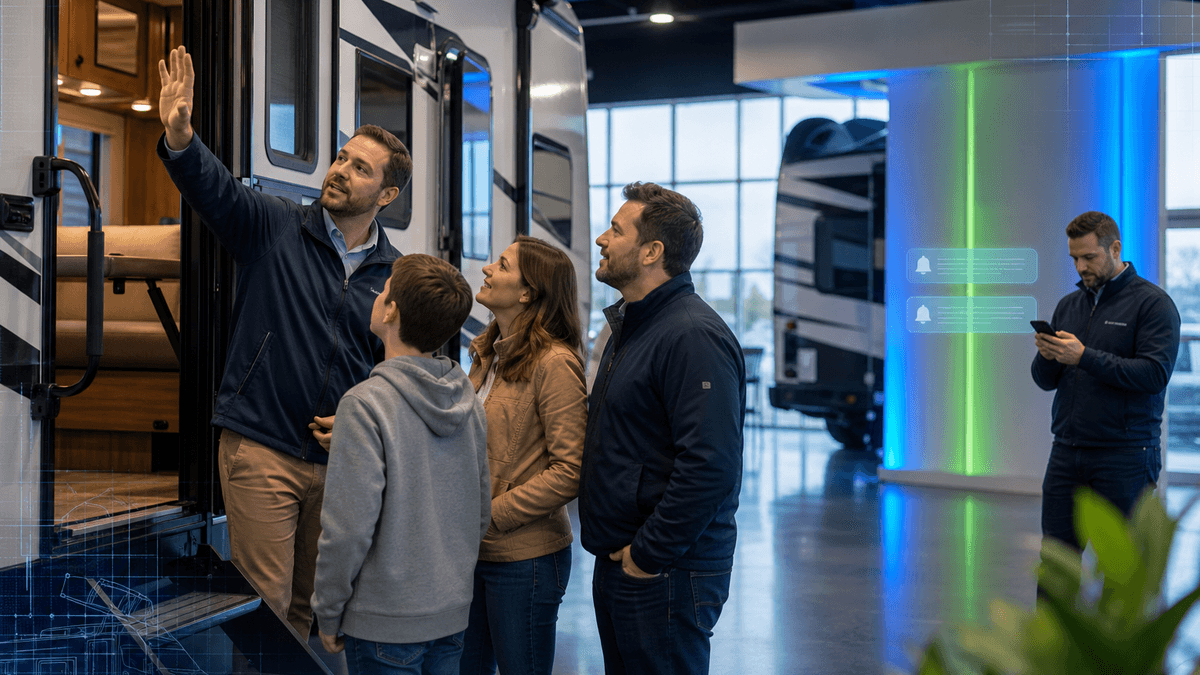
Meanwhile, a new digital lead may be asking a simple question: Is this unit still available? Can I put money down? Do you take trades? What does delivery look like?
Can I come in Sunday? If that reply sits until Monday, the customer may not complain. They may simply keep shopping.
- Powersports and RV buyers often shop outside traditional desk hours, especially evenings and weekends.
- A seasonal traffic spike can hide missed digital opportunities because the floor feels busy.
- Many leads are not lost from one bad answer; they are lost because the conversation pauses too long.
- Managers need a system that protects digital momentum while the team handles in-store customers.
The job is not just faster replies. It is conversation ownership.
A normal CRM can tell a salesperson what task is due. That is not the same as owning the conversation. Powersports and RV sales cycles often include multiple small steps: checking the buyer’s intended use, confirming tow vehicle fit, discussing payment range, pricing accessories, reviewing trade details, answering warranty questions, scheduling a visit, and keeping the customer warm until the right unit or timing lines up. A task queue can remind someone to call.
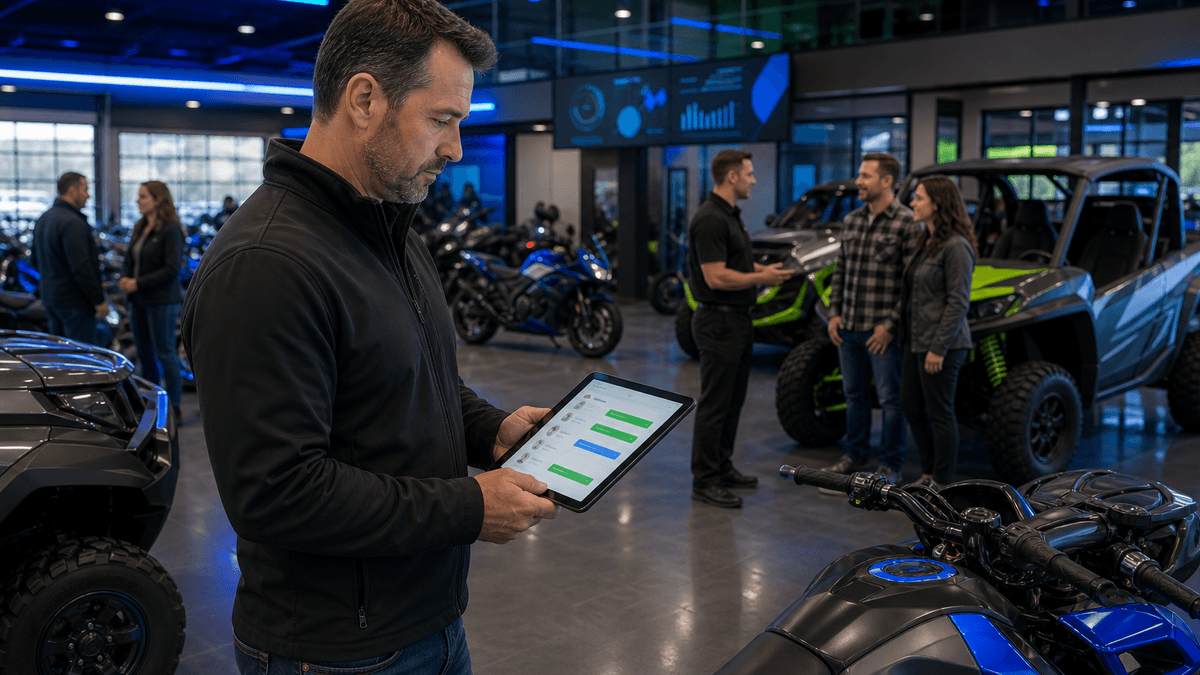
It cannot reliably make sure the next useful message goes out, the inbound response is handled, and the ready customer gets escalated. An AI CRM operating layer is built around active conversation flow. It should keep track of who is engaged, what they are asking, what needs a human, and what follow-up should happen next. That matters because powersports and RV shoppers often do not move in a straight line from lead to appointment to sale.
They compare. They wait. They ask family members. They watch payments.
They come back when the season, weather, bonus check, trade value, or trip plan makes the timing feel right.
- The operating question is not, “Did the task get marked complete?”
- The better question is, “Did the customer conversation keep moving?”
- AI should help managers find active buyers, not just create more activity records.
- Human handoff should happen when the customer is ready for judgment, negotiation, financing, or an appointment.
Powersports and RV shoppers ask practical questions before they are ready to visit
Many powersports and RV leads are practical before they are emotional. The customer may love the unit, but the next message is usually operational: availability, price, accessories, financing, trade, delivery, service, storage, or appointment timing. That creates a communication challenge. These are not always “ready now” closing conversations, but they are buying signals.
A customer who asks whether a camper can be delivered before a trip, whether a motorcycle has a specific accessory, or whether a side-by-side can be financed with a trade is giving the store a path forward. The mistake is treating those questions as low-priority because the buyer is not immediately sitting at a desk. In seasonal categories, the buying window can build slowly and then close quickly. A useful answer today can be the reason the customer re-engages when they are ready to visit.
- Availability questions should trigger quick confirmation and next-step guidance.
- Financing questions should route toward a useful human handoff when details matter.
- Trade questions need collection of basic information without letting the thread die.
- Appointment questions should make scheduling easy while the customer is motivated.
- Accessory, delivery, and usage questions help the team understand intent and urgency.
Where TECOBI fits: Response Bot, Auto Bots, and human handoffs
TECOBI is designed as an AI CRM operating layer for always-on customer conversations. For powersports and RV dealers, the practical value comes from how the pieces work together. Response Bot helps cover inbound replies so customers are not left waiting when staff are with showroom traffic, after hours, or between appointments. Auto Bots run proactive follow-up, nurture, and reactivation so older leads and undecided shoppers do not depend entirely on a salesperson remembering to work the queue.
When a customer shows buying intent or needs a real person, the workflow should hand the conversation to staff instead of trying to force automation past its useful point. That balance matters. The goal is not to make every conversation robotic. The goal is to make sure no valuable conversation stalls before the sales team has a chance to step in.
- Response Bot can help manage inbound customer replies and identify when a human should take over.
- Auto Bots can keep follow-up alive across long buying cycles, no-shows, old leads, and seasonal shoppers.
- Text broadcasting can support targeted outreach for inventory arrivals, events, seasonal pushes, and reactivation campaigns.
- Appointment workflows can reduce friction when a shopper is ready to visit.
- Human handoffs keep the team involved where judgment, trust, and deal structure matter most.
Long-cycle buyers need persistence without pestering
Long buying cycles are normal in powersports and RV. A family may start shopping campers months before a summer trip. A rider may watch inventory until the right bike appears. A side-by-side buyer may wait on financing, land use, trailer setup, or a trade.
The danger is that most CRM follow-up processes are front-loaded. The first day gets attention. The first week gets tasks. Then the customer fades into a database unless a salesperson is unusually disciplined or a manager is constantly inspecting overdue activity.
AI follow-up changes that operating model. It can continue useful, spaced-out touches, listen for replies, and surface the customer when engagement returns. That is especially important in seasonal businesses because an old lead in February can become a serious buyer in April, May, or June.
- Do not treat older leads as dead just because they did not buy during the first contact window.
- Use follow-up to learn timing, usage, unit preference, trade status, and appointment readiness.
- Let automation handle persistence while people handle high-value conversations.
- Reactivation should feel like continued service, not random blasting.
Managers need visibility after the weekend rush
After a big weekend, managers need more than a feeling that the store was busy. They need visibility into what happened with inbound leads, which customers replied, what conversations need attention, which appointments were set, which sources are creating engagement, and where handoffs are getting stuck. That is why reporting matters in an AI CRM operating layer. If the system handles customer conversations, managers should be able to inspect the work: AI performance, engagement, calls, sources, appointments, and outcomes.
This helps operators coach the team, adjust campaigns, and decide where follow-up needs more human attention. For powersports and RV stores, reporting also helps separate seasonal noise from real opportunity. A lead source may look weak if judged only on immediate purchases, but stronger if it creates engaged shoppers who book later. A salesperson may appear busy, but reporting may show that inbound replies are waiting too long.
A weekend event may generate many conversations that need structured follow-up the next week.
- Track engagement, not just raw lead count.
- Review appointment activity after seasonal pushes and weekend campaigns.
- Inspect handoffs so ready shoppers do not sit unanswered.
- Use source reporting to understand which channels create conversations worth working.
- Coach from conversation evidence instead of only overdue tasks.
How to start without turning the store upside down
AI CRM is useful for powersports and RV dealers when it solves the actual operating problem: customers are active when staff are busy, buying cycles are uneven, and follow-up needs to continue long after the first form submission. A practical rollout should start with the communication gaps that are easiest to feel on the floor. Cover inbound replies. Automate persistent follow-up.
Give customers easier appointment paths. Make sure handoffs are visible. Then use reporting to refine the process instead of relying on anecdotes from the weekend. The dealers who benefit most will not be the ones chasing AI novelty.
They will be the operators who use AI to protect customer momentum, reduce manual follow-up pressure, and keep salespeople focused on the conversations where human skill matters most.
- Start with inbound reply coverage, especially nights, weekends, and peak showroom hours.
- Add proactive follow-up for unsold leads, no-shows, old opportunities, and seasonal shoppers.
- Define when AI should hand off to a salesperson or manager.
- Use appointment scheduling and reminders to reduce friction once intent is clear.
- Review reporting every week so the process improves with real activity data.