
A dealership lead is not just a name, phone number, and source. It is usually a vehicle story in progress: the shopper liked a specific unit, compared a price, asked about a trim, hesitated on payment, waited for trade numbers, or went quiet when the car sold. That story is what makes the next follow-up useful. When automotive AI keeps the vehicle context attached, follow-up stops sounding like a generic pulse check and starts acting like an informed continuation of the deal.
The customer result: fewer stale check-ins, more useful next steps
The practical customer result is simple: shoppers are more likely to re-engage when the dealership’s next message connects to what they were actually considering. That does not require fake friendliness or overdone personalization. It requires the system to remember the selling context. For an internet sales manager, the difference shows up in the quality of the next action.

A stale check-in says, “Are you still interested?” A useful follow-up says the equivalent of, “The SUV you asked about is still available,” “That one moved, but we have a similar option,” or “The price changed enough that it may be worth another look.” That is the customer-result lens. The shopper feels less like they are being worked from a list and more like the dealership is still tracking the same buying problem they originally raised.
TECOBI’s role as an AI CRM operating layer is to keep customer conversations moving while preserving enough state for the next reply, bot action, or human handoff to make sense.
- The customer does not have to restate which vehicle started the conversation.
- The team can follow up around availability, alternatives, payment fit, or appointment timing.
- The manager can inspect whether the conversation is still connected to a live opportunity instead of only seeing activity volume.
What changes when price, availability, or trim changes
Inventory is not static. A shopper may inquire on a specific vehicle, then the dealership discounts it, sells it, receives a similar trade, gets a new allocation, or changes the merchandising position. Each change should affect the conversation. This is where generic automation breaks down.
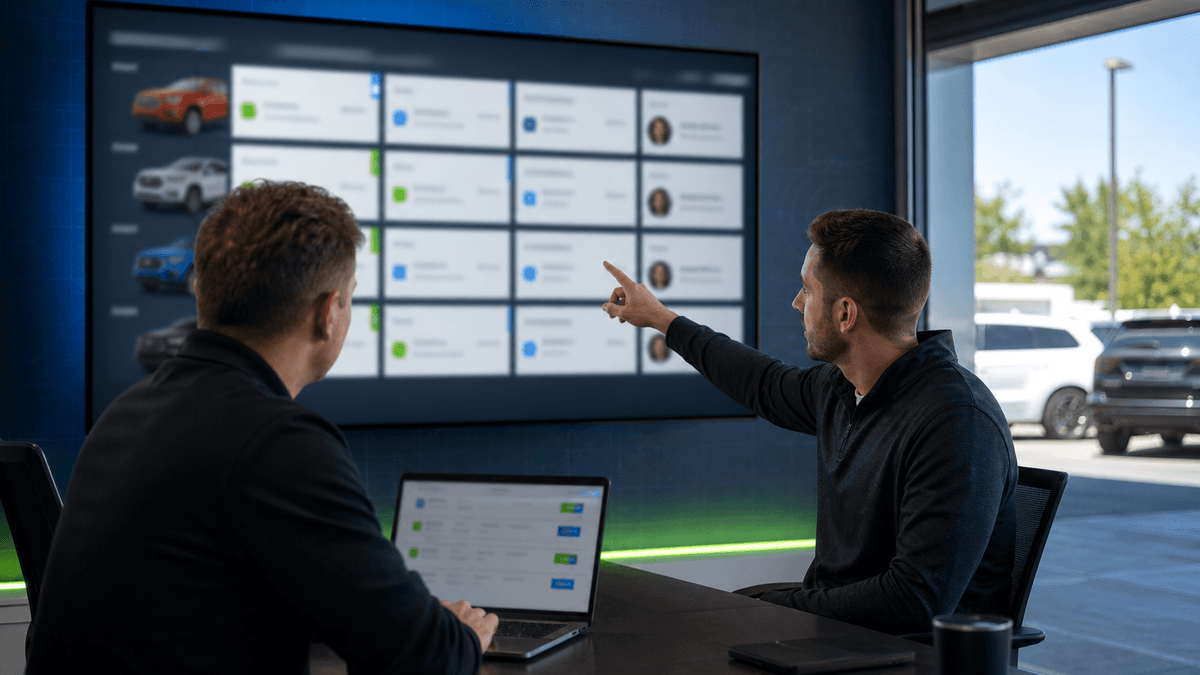
If the system only knows that a lead is seven days old, it can only send a seven-day-old-lead message. If it knows the vehicle story, it can decide whether the next touch should protect urgency, offer a substitute, ask a clarifying question, or hand the conversation to a person. For managers, this matters because inventory changes create both risk and opportunity. A sold unit can frustrate a customer if nobody acknowledges it.
A similar arrival can revive a quiet shopper. A price change can turn a stalled conversation into a serious appointment. Automotive AI is useful when it helps the team act on those changes without waiting for a salesperson to manually rediscover every thread.
- If the vehicle is still available, follow-up can reinforce the same opportunity.
- If the vehicle is sold, the conversation should pivot instead of pretending nothing changed.
- If a similar unit appears, proactive follow-up can be relevant instead of random.
- If price or payment fit changes, the message can give the customer a reason to reconsider.
Why generic personalization still feels generic
Dealerships often talk about personalization as if using the customer’s first name is enough. Customers know the difference. A message can include a name and still feel irrelevant if it ignores the vehicle, budget, trade, appointment history, or prior objection. Inventory context is stronger than surface personalization because it is tied to the shopper’s actual decision.
The customer does not wake up thinking, “I hope the dealership remembers my name.” They are thinking about whether the vehicle is available, whether the payment works, whether their trade number improved, whether another store has something similar, or whether the trip is still worth it. That is why inventory-aware follow-up is not just a marketing trick. It is a sales management discipline. The system needs to carry forward the detail that changes the customer’s next decision.
- Weak personalization: first name, generic greeting, broad “still looking?” message.
- Useful relevance: vehicle, price movement, availability, substitute unit, appointment status, trade or finance next step.
- Manager standard: every automated touch should have a reason a salesperson would recognize as valid.
The operating loop: capture, watch, act, review
Inventory-aware follow-up works best when the system treats the conversation as current state, not a dead note field. The dealership needs a practical loop: First, capture the vehicle interest and the customer’s buying condition. Second, monitor whether that vehicle story changes. Third, adjust the next follow-up so the customer receives a timely, relevant reason to engage.
Fourth, bring in a human when the reply shows buying intent, confusion, objection, or appointment readiness. TECOBI separates these jobs operationally. Auto Bots can keep proactive nurture and reactivation moving. Response Bot can handle inbound replies and move the conversation toward the right next step or human handoff.
The platform view matters because inventory context is only useful when it can travel across proactive follow-up, inbound response, scheduling, and reporting.
- Capture: vehicle, intent, timing, trade, finance, and prior objections where available.
- Watch: availability, replacement options, price movement, and reply behavior.
- Act: send a relevant touch or route the conversation when the customer raises their hand.
- Review: inspect whether AI activity is creating conversations that salespeople can actually work.
Human handoffs work better when the inventory thread survives
A handoff is where many good dealership conversations get worse. The customer replies with interest, but the salesperson receives only a lead record, a task, or a vague note. Then the human starts over: “What vehicle were you looking at?” That question may be necessary sometimes, but when the system already had the answer, it creates friction. Inventory context makes the handoff cleaner.
The salesperson should be able to see the vehicle thread, the latest reply, the reason the customer re-engaged, and the next likely action. If the shopper responded to a price change, the salesperson should know that. If the original unit sold and the customer asked about alternatives, the salesperson should know that too. The point is not to remove people from the sale.
The point is to make sure people enter the conversation with the current story intact.
- The salesperson can continue the conversation instead of requalifying from zero.
- The customer does not feel bounced from bot to human.
- The manager can see whether handoffs are happening at moments that deserve human attention.
- The store protects speed without sacrificing context.
How managers should measure inventory-aware follow-up
Internet sales managers do not need another vague AI claim. They need a way to inspect whether follow-up is actually better. For inventory-aware automotive AI, the scorecard should focus on relevance and resolution, not just message count. Useful questions include: How many replies came from vehicle-specific follow-up?
How often did AI revive a conversation after a price or availability change? How many customer replies required a human handoff? How many handoffs included enough context for the salesperson to act immediately? How many active conversations are tied to sold, unavailable, or changed inventory and need a pivot?
This is where the commercial value lives. The dealership is not buying AI to say more words. It is buying an operating layer that keeps conversations current enough for customers to respond and salespeople to work them.
- Track reply quality, not just outbound volume.
- Inspect handoff readiness, not just bot containment.
- Watch stale vehicle threads that need a replacement recommendation.
- Review appointment creation and show outcomes connected to AI-assisted conversations.
- Use reporting to coach the process, not to admire activity.
The manager takeaway: relevance is the anti-stale follow-up system
Inventory context matters because it gives follow-up a reason to exist. Without it, automotive AI can become another way to send generic reminders faster. With it, the system can preserve the customer’s vehicle story, adapt when inventory changes, and bring humans into conversations with the right context. For internet sales managers, the standard is practical: if a salesperson would need the vehicle details to make a good call, the AI follow-up system needs those details too.
Relevance is not decoration. It is what keeps the conversation from going stale.
- Keep the vehicle story attached from lead intake through follow-up.
- Treat inventory changes as conversation triggers, not back-office updates only.
- Use AI to preserve context for the human team, not to replace sales judgment.
- Measure whether follow-up creates workable conversations, appointments, and clean handoffs.