
Dealerships often put every SMS use case into one bucket: text message marketing. That sounds efficient until the store has 400 customers receiving a promotion, 37 people replying with different questions, three asking about trades, five needing appointments, one angry opt-out, and a sales manager asking who owns what. The practical distinction is simple: text broadcasting is built for audience communication. Conversation workflows are built for reply ownership.
Both matter. They just should not be managed like the same job. This comparison guide is for BDC leaders, sales managers, and CRM owners deciding when to use text broadcasting for car dealership campaigns and when to shift into a TECOBI-style conversation workflow with Response Bot, Auto Bots, appointment handling, and human handoffs.
Text broadcasting is a megaphone, not a desk assignment
Text broadcasting is the right tool when the dealership needs to send a relevant message to a defined audience at the same time. Think of it like a controlled megaphone: targeted, trackable, and useful for getting attention quickly. A conversation workflow is different. It is not judged only by how many messages went out.
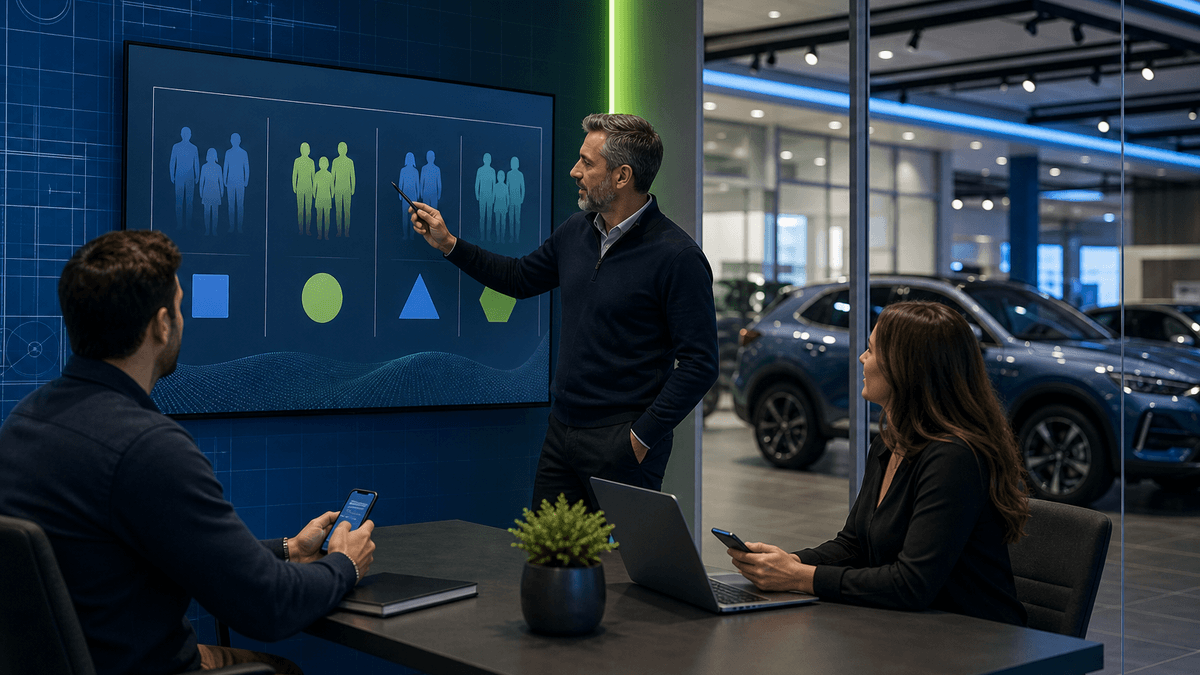
It is judged by whether every reply was handled, routed, followed up, and visible to the manager. That is a desk assignment, not a megaphone. The mistake is buying or operating a broadcast tool and expecting it to behave like a BDC. A broadcast can create demand.
It does not automatically qualify the shopper, answer the follow-up question, chase the missed appointment, revive the 90-day lead, or know when a salesperson needs to step in.
- Use broadcasting when the audience is the center of the workflow: promotions, event notices, inventory alerts, service reminders, and recall-style communications.
- Use conversation workflow when the customer’s response becomes the center of the workflow: questions, objections, trade details, credit concerns, appointment requests, and handoffs.
- Do not measure both tools by the same scorecard. Broadcasts are campaign operations. Conversations are sales and service operations.
The split happens the moment customers reply
The handoff point is not philosophical. It happens the moment customers start replying. A dealership can send a clean broadcast about a weekend buyback event, a payment-focused inventory push, or a service opening. If a customer taps back with “What’s my trade worth?” the campaign is no longer just a campaign.
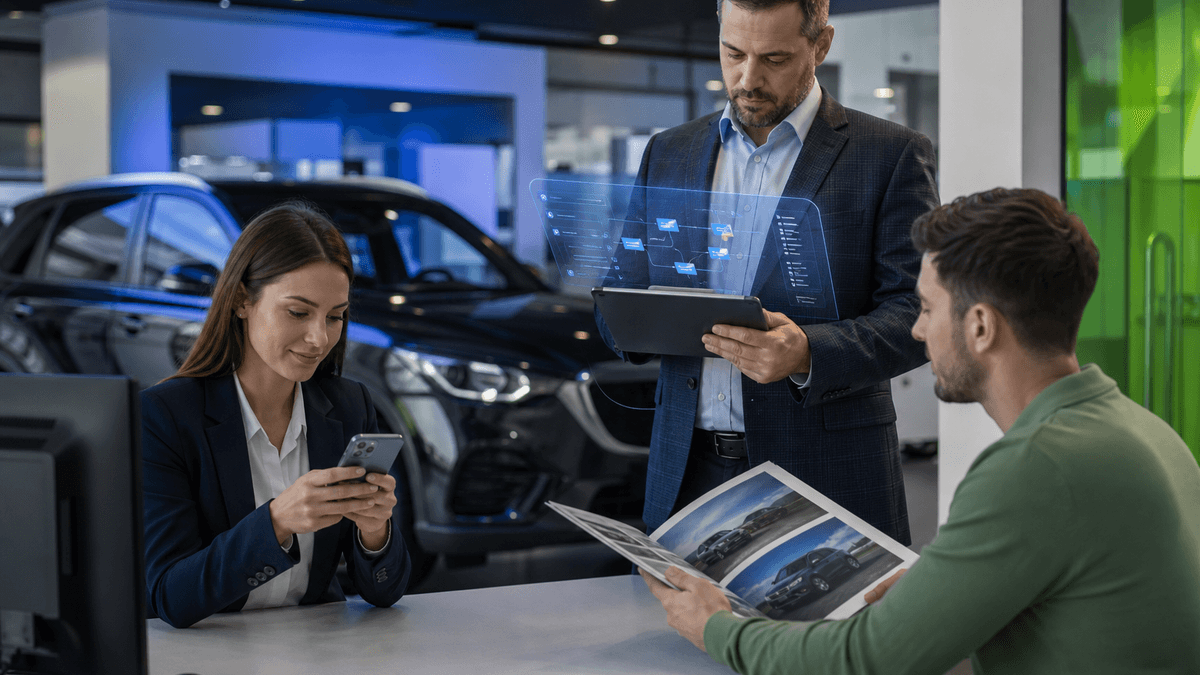
It is now a live sales conversation. If another customer replies “Can I come in Saturday?” that is scheduling work. If someone replies “Stop texting me,” that is a compliance and preference-handling event. This is why stores get into trouble when they judge a texting tool only by send volume.
Volume is not the hard part. The hard part is the messy middle after the blast: different intents, different urgency levels, different owners, and different next steps. TECOBI’s Response Bot is built around inbound reply handling and human handoffs. That does not replace broadcasting.
It protects the dealership from letting broadcast-generated replies sit unresolved.
- A reply with intent should create ownership, not just a notification.
- A reply with an appointment request should move toward scheduling, not sit inside a shared inbox.
- A reply with confusion, objection, or frustration should be escalated cleanly before the customer cools off.
- An opt-out or preference signal should be handled consistently instead of left to individual staff interpretation.
Four dealership scenarios where the right tool changes
Here is the practical comparison most CRM owners should use before launching a dealership SMS campaign. A promotion to a well-defined audience usually belongs in text broadcasting. A manager may want to reach customers with equity, shoppers who asked about trucks, previous buyers, or prospects tied to a specific model. The goal is reach, timing, and relevance.
Recall-style or service-lane audience messaging can also fit broadcasting when the message is informational and the audience is known. But if customers are likely to ask follow-up questions, the store needs a reply plan before sending. Inventory-specific outreach is where the line gets interesting. If the dealership is simply announcing that a group of matching vehicles arrived, broadcasting may work.
If the message is going to customers who have open deals, trade discussions, credit concerns, or active appointment history, the store should treat it as a conversation workflow because context matters. Aged-lead reactivation usually should not be a one-time blast. The goal is not just to announce something; it is to restart a stalled buying conversation. That is where Auto Bots and persistent follow-up are more appropriate than a single campaign send.
- Promotion: broadcast first, then route replies into conversation ownership.
- Recall-style audience notice: broadcast if the audience is clean and the message is simple; prepare for service or support replies.
- Inventory-specific outreach: broadcast for broad matching audiences; conversation workflow for active buyers with deal context.
- Aged-lead reactivation: use proactive follow-up, not a one-and-done blast, when the store needs ongoing engagement.
Broadcast success can create operational failure if replies have no owner
A broadcast can be successful and still create a mess. That sounds contradictory, but every operator has seen it. The campaign gets attention. Customers reply.
The inbox fills up. Salespeople cherry-pick easy replies. Managers ask for updates. Some customers get called twice.
Others never get answered. The vendor report says the campaign created engagement, but the floor feels like it inherited a pile of loose ends. That is why reply ownership should be defined before launch. Who gets trade-related replies?
Who handles appointment requests? What happens after hours? Which replies stay with AI? Which replies require a manager or salesperson?
What happens if the first human does not act? TECOBI’s operating-layer approach is built for that second half of the job. Text broadcasting can start the motion. Response Bot, Auto Bots, appointment workflows, reporting, and human handoffs keep the motion from turning into unresolved conversations.
- Before sending, define the audience, the expected reply types, and the owner for each reply path.
- Do not dump all replies into a shared inbox unless someone is accountable for clearing and routing them.
- After-hours campaigns need an after-hours reply plan, especially for high-intent shopping windows.
- Managers should be able to see whether a reply was handled, not just whether a text was delivered.
Measure broadcasts and conversations on different scorecards
Broadcast reporting should answer campaign questions. Conversation reporting should answer operating questions. If a store blends those together, managers end up rewarding activity instead of outcomes. For a broadcast, useful questions include: Was the audience correct?
Did the message reach customers? Did people engage? Which segment produced replies? Which campaign theme created useful demand?
For a conversation workflow, the questions change: How many replies needed action? How quickly were they handled? How many turned into appointments? Which conversations stalled?
Which handoffs were missed? Which source or campaign created the best downstream outcomes? This distinction matters for commercial investigation. A dealership shopping for text message marketing software may think it needs a bigger send engine.
In reality, the store may need cleaner ownership after replies arrive. Or it may need both: broadcast capability for targeted campaigns and a conversation layer for the follow-through.
- Broadcast scorecard: audience quality, delivery, engagement, reply volume, campaign timing, and offer fit.
- Conversation scorecard: reply resolution, appointment movement, human handoff quality, source outcomes, and manager visibility.
- Sales managers should not let high send volume hide weak reply handling.
- CRM owners should connect campaigns to downstream outcomes without pretending every reply is the same type of lead.
The operator’s rule: reach first or ownership first
Use this rule of thumb before the next dealership SMS campaign: If the message is mostly one-to-many, time-sensitive, and audience-driven, start with text broadcasting. If the expected customer response requires qualification, context, persistence, scheduling, or staff accountability, design the conversation workflow first. That does not mean every broadcast needs a complicated process. A simple Saturday sale reminder to a small, clean audience may only need basic monitoring.
But a buyback event, model-specific inventory push, credit reactivation list, or service campaign can create enough reply complexity that the store needs ownership mapped before the send button gets touched. The best dealership texting operation is not “broadcast or conversation.” It is broadcast when reach is the job, conversation workflow when ownership is the job, and reporting that shows managers the difference.
- Choose text broadcasting when the campaign goal is targeted reach.
- Choose Response Bot-style handling when inbound replies need fast interpretation and routing.
- Choose Auto Bots when the store needs persistent proactive follow-up over time.
- Choose appointment workflows when the desired next step is scheduling, reminders, and show management.
- Choose reporting when managers need to see whether campaigns turned into handled opportunities.